Hydroxyurea, folic acid, transfusions, painkillers at 2 a.m. Many Nigerian families know that routine by heart. Those treatments help a great deal, but they manage the disease. They don't remove it.
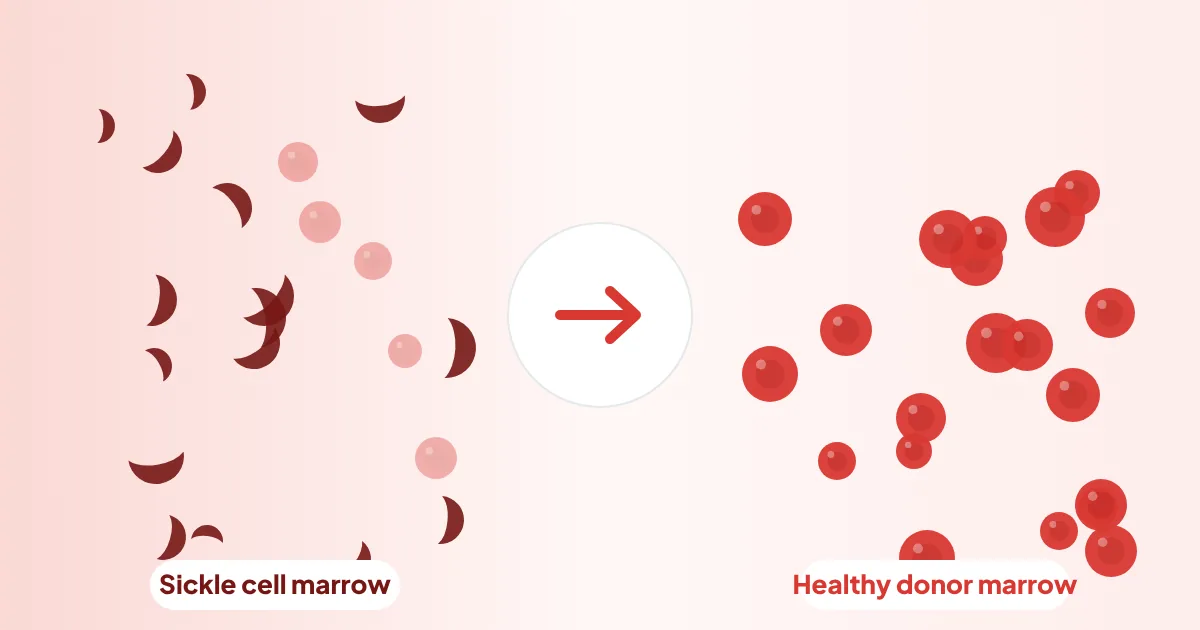
A bone marrow transplant is different. It replaces the marrow that makes sickle-shaped cells with healthy marrow from a donor. When it works, your child no longer has sickle cell disease.
How a transplant cures sickle cell
The faulty haemoglobin is made in the bone marrow. Chemotherapy first clears your child's own marrow. Stem cells from a healthy donor are then given through a drip. They travel to the bones, settle in, and start making normal red cells within a few weeks. A brother or sister with sickle cell trait (AS) can usually still donate.
Which children are good candidates
Results are best in children, ideally before the disease has damaged the brain, lungs or kidneys. Doctors usually recommend a transplant after a stroke or an abnormal transcranial Doppler scan, repeated acute chest syndrome, frequent crises despite hydroxyurea, or regular transfusions. The treating transplant specialist makes the final call.
What the results look like
A fully matched sibling gives the best odds. In an international study of 1,000 such transplants, 92.9% of patients were alive five years later and 91.4% were alive and free of sickle cell disease. Younger patients did better.
Half-matched transplants from a parent have improved a lot in the past decade, though they carry more risk. That's why we ask families to test every full sibling first.
| Donor | Who | What to expect | Cost in India |
|---|---|---|---|
| Matched sibling | Full brother or sister, 10/10 match | Best results; around 9 in 10 cured in large studies | from $25,000 |
| Half-matched (haplo) | Parent or half-matched sibling | Good and improving; more risk of rejection and GVHD | from $35,000 |
| Matched unrelated | Registry volunteer | Possible, but donors of African ancestry are scarce on registries | on request |
The risks, stated plainly
A transplant is a serious undertaking. The main risks are infection while immunity is low, graft-versus-host disease (donor cells attacking the body), graft failure, and reduced fertility from chemotherapy. Fertility preservation can be discussed beforehand. A good team talks through all of this openly, and you should expect them to.
Why Nigerian families choose India
India has a large sickle cell population of its own, so its transplant haematologists treat this disease often. Matched sibling transplants start from USD 25,000 and most families stay about three months. Compare the hospitals and doctors, the full cost picture and how the process works, or read our India vs Nigeria cost comparison and step-by-step guide.
Where to start
Send us your child's electrophoresis report, recent blood counts and a short medical history. A senior transplant specialist reviews it within 48 hours, at no cost to you.
BMT Treatment India helps families from Nigeria and across Africa plan bone marrow transplants at accredited hospitals in India, from the first report to the flight home.
Sources and notes. Survival figures: Gluckman E, et al. Sickle cell disease: an international survey of results of HLA-identical sibling hematopoietic stem cell transplantation. Blood, 2017. This article is general information, not medical advice; only the treating transplant physician can confirm whether a transplant is suitable for your child.
Keep reading

Cost of Sickle Cell BMT in India vs Nigeria: Why Families Are Choosing India
Sickle cell bone marrow transplant in India starts from USD 25,000, against more than ₦80 million at home. A full cost breakdown for Nigerian families.
Read the guide →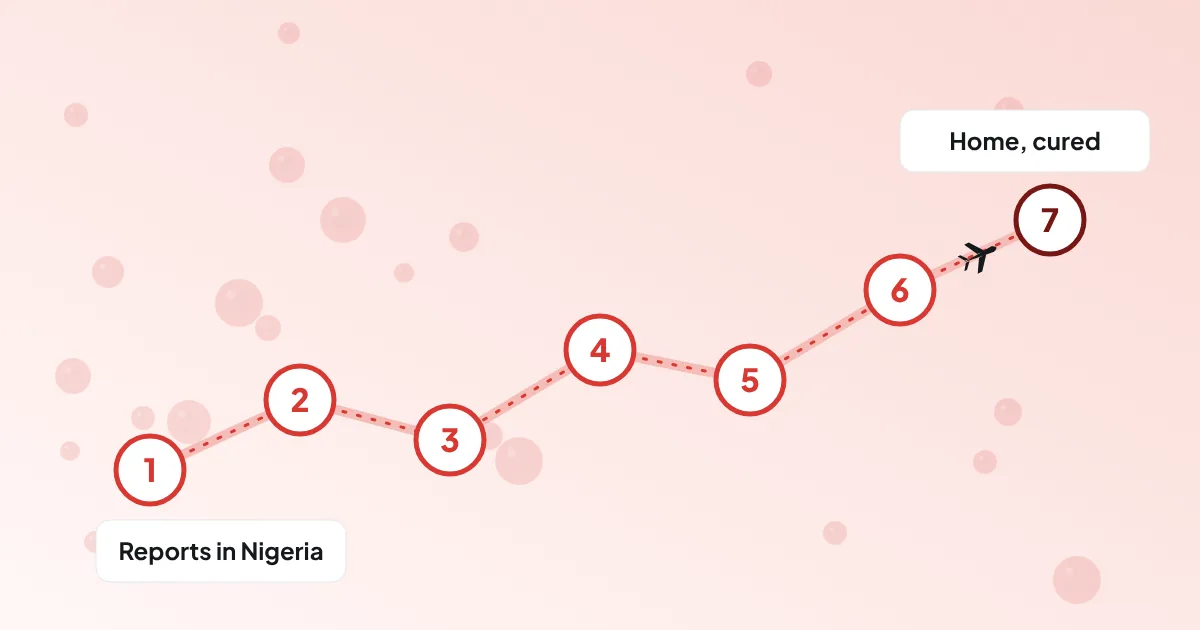
How to Get Your Child’s Sickle Cell Treated in India: Step-by-Step from Nigeria
How Nigerian families arrange sickle cell treatment in India: reports, HLA typing, medical visa documents, travel and the 90-day transplant timeline.
Read the guide →