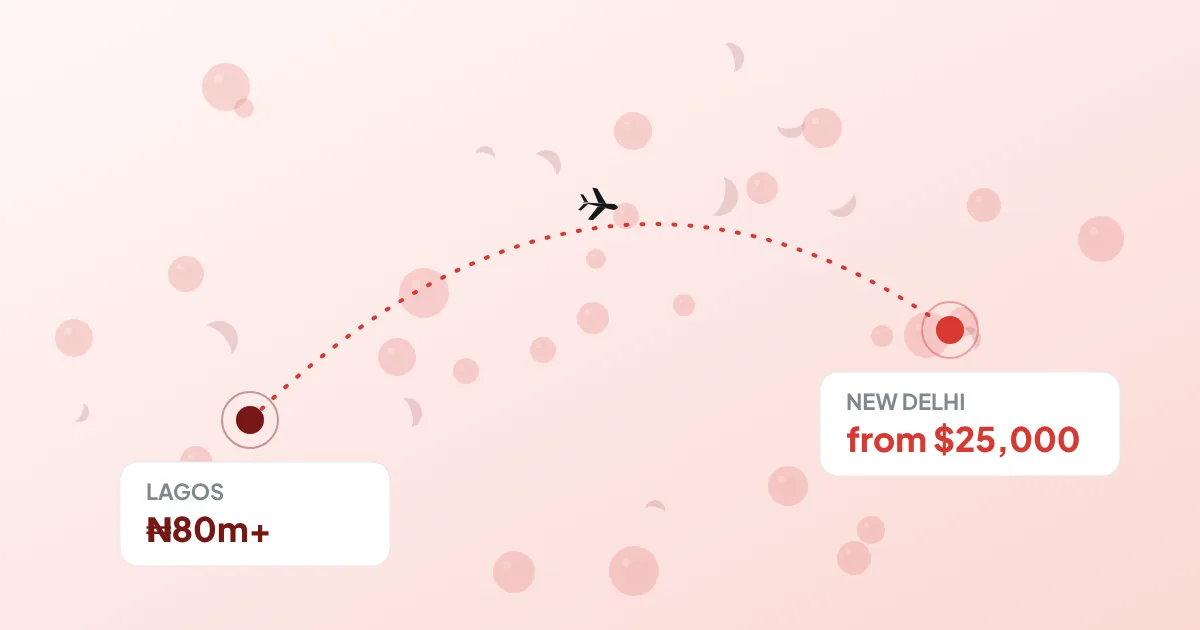
“How much will it cost?” is nearly always the first thing a Nigerian parent asks us. It usually comes before any question about doctors or flights, and that makes sense. A bone marrow transplant is the only established cure for sickle cell disease, and for most families the money decides whether it happens at all.
So here are the numbers, as plainly as we can put them.
What a sickle cell BMT costs in Nigeria
Nigeria now has its own transplant programme, and that's real progress. But capacity is small and the bill is heavy. Organisers of the country's main programme put one transplant at more than ₦80 million, roughly USD 60,000 at October 2026 rates. Only a handful of transplants happen each year, while an estimated 150,000 Nigerian babies are born with sickle cell disease every year.
What the same transplant costs in India
At accredited Indian transplant units, a transplant from a fully matched brother or sister starts from USD 25,000 (about ₦33 million). If no sibling matches, a half-matched transplant, usually with a parent as donor, starts from USD 35,000. You can read how the two differ in our guide to types of bone marrow transplant.
The full trip, not just the hospital bill
The package covers the hospital. It doesn't cover rent, food or flights, so here's a realistic budget for one child and two adults staying about three months.
| Item | Matched sibling | Half-matched (haplo) |
|---|---|---|
| Hospital transplant package | from 25,000 | from 35,000 |
| HLA typing and tests before travel | 500–1,500 | 500–1,500 |
| Furnished flat near the hospital, ~3 months | 2,000–3,600 | 2,000–3,600 |
| Return flights, 3 people | 2,400–3,600 | 2,400–3,600 |
| Food, local transport, phone | 900–1,500 | 900–1,500 |
| Contingency (15–20%) | 4,600–7,000 | 6,100–9,000 |
| Indicative total | ≈ 35,000–42,000 | ≈ 47,000–54,000 |
Even with everything added, a matched sibling transplant in India costs less than the hospital bill alone at home.
Why the gap is so wide
It isn't because Indian care cuts corners. The units we work with are accredited and run high transplant volumes, which spreads fixed costs and builds experienced teams. India also makes most of its own chemotherapy and supportive medicines as generics. And India has a large sickle cell population of its own, so its haematologists see the disease every week, not once in a while. There's more on this in why families choose India.
Costs that catch families out
Two things push a final bill above its estimate: extra days beyond the package, and intensive care. Ask every hospital for its per-day rate once the package ends, and for its daily ICU rate. Keep 15–20% aside. Families who do this rarely get a nasty surprise. Our treatment cost page lists what packages usually include and exclude.
What to do next
Send us your child's haemoglobin electrophoresis report, recent blood counts and HLA typing if you have it. Within 48 hours a senior transplant specialist reviews the case, and you get a written estimate rather than a brochure figure. Meanwhile, take a look at the hospitals and doctors we work with, or read our step-by-step guide to treatment in India from Nigeria.
BMT Treatment India helps families from Nigeria and across Africa plan bone marrow transplants at accredited hospitals in India, from the first report to the flight home.
Sources and notes. Nigerian cost figure as reported by organisers of Nigeria's sickle cell transplant programme, June 2026. Birth estimate: about 150,000 affected births a year (Nigerian health authorities). Exchange rate: ₦1,333 per USD, official market, October 2026. Indian prices are starting package prices; flights and living costs are planning estimates.
Keep reading
How to Get Your Child’s Sickle Cell Treated in India: Step-by-Step from Nigeria
How Nigerian families arrange sickle cell treatment in India: reports, HLA typing, medical visa documents, travel and the 90-day transplant timeline.
Read the guide →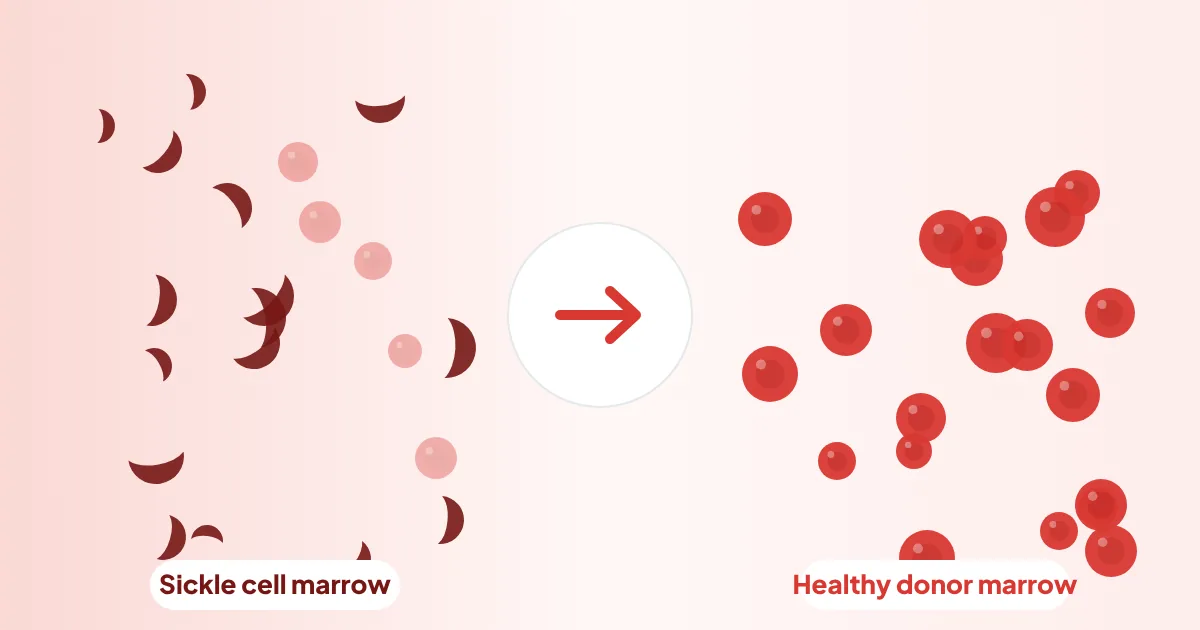
Sickle Cell Disease Cure in India: Bone Marrow Transplant Guide for Nigerian Families
Can sickle cell be cured? How a bone marrow transplant works, which children qualify, success rates and donor options, for Nigerian families considering India.
Read the guide →